
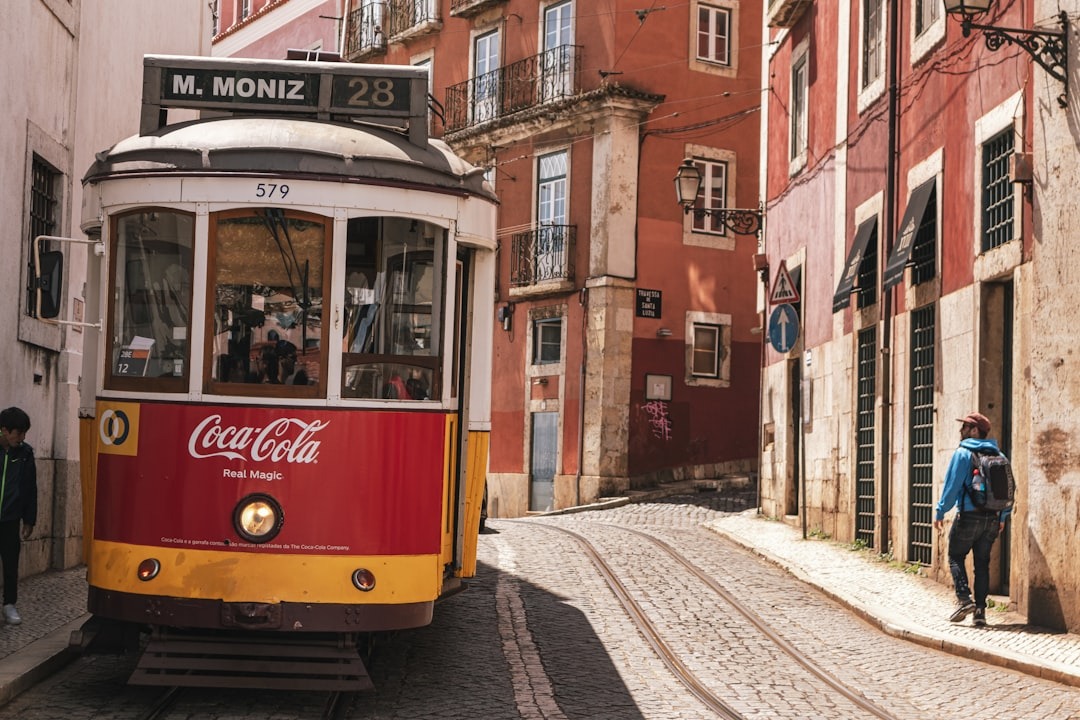
Let me be upfront: I rarely ride Tram 28 myself — not because I don't love it, but because in the height of August it's literally impossible to find a seat. That said, I know it inside out. I know the tricks to board sitting down, the stops the tourist guides never mention, and exactly where pickpockets tend to operate. This guide is what I'd tell a friend arriving in Lisbon today and asking for the essentials about the country's most famous tram. Prices verified for 2026, real timetables, what's genuinely worth seeing along the route — and what's overhyped. No excessive romance, no glossing over the downsides. Lisbon from the inside, as it deserves to be seen.
🗺️ Full Route — The 10 Main Stops
Explore the essential stops of Tram 28 and what to see at each one.
💾 Bookmark this page to access it offline during your visit!
The Tram 28 Route: Neighbourhood by Neighbourhood
This historic line runs between Praça Martim Moniz and Cemitério dos Prazeres in Campo de Ourique. It covers roughly 7 km (4.3 miles) through seven historic neighbourhoods, climbing and descending hills that are part of the charm — along streets so narrow it sometimes seems impossible to fit through. The route passes through Anjos, Graça, Alfama, Baixa, Chiado, São Bento, Estrela, and Campo de Ourique, in both directions.

Martim Moniz: The Starting Point (and the Longest Queue)
Praça Martim Moniz is the westbound departure stop. This is where the longest queues form — tourists arriving map in hand, hoping to secure a seat. The good news: anyone boarding at the terminus is guaranteed a seat. It's simply a matter of waiting for the right tram. The square itself is far livelier since its recent regeneration: international food kiosks, the Mouraria neighbourhood right next door, and the Fusão market happening here regularly.
📍 Praça Martim Moniz, 1100-341 Lisboa
🚌 Metro: Martim Moniz (Linha Verde) | A pé do Rossio: 10 min
Graça: The Stop Lisboetas Love
The carriage climbs along Avenida Almirante Reis and enters the Bairro da Graça — one of the most authentically local neighbourhoods in the city. Long-standing families still live here, café prices are reasonable, and the viewpoint is one of Lisbon's finest: a sweeping view of the castle and the River Tagus (Rio Tejo). Many locals hop off here and reboard further along the line.
Graça is also your best starting point for Lisbon's finest viewpoints. Within 10 minutes on foot you reach Miradouro da Senhora do Monte — the highest in the city, with a panorama that stops people mid-sentence. See our full guide to the Lisbon viewpoints.
📍 Address: Miradouro da Graça, Largo da Graça, 1170-165 Lisboa
🕐 Hours: Open 24 hours | Best visited in the late afternoon
💶 Price: Free
Alfama: The Heart of the Route
The Alfama stretch is the most photogenic section of the entire journey. The tram descends along Calçada de São Vicente, passing Largo das Portas do Sol — with its statue of Saint Vincent and views over the Tagus — and the Miradouro de Santa Luzia, where azulejo tile panels depict Lisbon before the 1755 earthquake.
Then it descends via Escolas Gerais towards the Sé. Lisbon's Cathedral (Sé de Lisboa), founded in 1147, sits right at the stop of the same name. A severe Romanesque façade, a gilded interior. It's worth stopping, going inside, then re-boarding — the tram runs every ten minutes.
📍 Address: Sé de Lisboa, Largo da Sé, 1100-585 Lisboa
🕐 Hours: Mon–Sat: 09:00–19:00 (9:00 AM–7:00 PM) | Sun: 09:00–20:00 (9:00 AM–8:00 PM)
💶 Price: Free entry (cloisters: ~€4) | sedelisboa.pt sedelisboa.pt
Baixa and Chiado: The Transition
From the Sé, the tram descends Rua de Santo António da Sé, passes through Largo da Madalena, and enters Rua da Conceição — one of Lisbon's oldest traditional shopping streets, lined with haberdashery and fabric shops that have resisted decades of mass tourism. It then climbs to Chiado, passing through Largo do Chiado and Praça Luís de Camões, with the poet's statue at the centre and café terraces all around. The famous Café A Brasileira is just a two-minute walk from here.
São Bento, Estrela & Campo de Ourique: The Calmer Finale
From Chiado, the tram descends Calçada do Combro towards São Bento. It passes in front of the Assembleia da República — Portugal's parliament, housed in a former convent. It then climbs to Estrela, where the Basílica da Estrela waits with its neoclassical dome visible from half the city. The Jardim da Estrela (Estrela Garden), directly opposite, is one of Lisbon's most beautiful gardens — a lake with ducks, a Victorian iron greenhouse, and benches shaded by enormous old trees.
The final stretch crosses Campo de Ourique, a residential neighbourhood with a village feel in the heart of the city: historic bakeries, local butchers, the renovated Mercado de Campo de Ourique. The route ends at Cemitério dos Prazeres — and no, it's not as gloomy as it sounds. It's one of Lisbon's most beautiful cemeteries, with imposing mausoleums and a peacefulness the city rarely offers.
📍 Address: Basílica da Estrela, Praça da Estrela, 1200-667 Lisboa
🕐 Hours: Mon–Sat: 07:45–20:00 (7:45 AM–8:00 PM) | Sun: 09:00–20:00 (9:00 AM–8:00 PM)
💶 Price: Free | basilicadaestrela.pt basilicadaestrela.pt
Tram 28 Tickets: 2026 Prices and How to Pay
Carris fares were updated on 1 January 2026. You have several options depending on how much you plan to use public transport during your visit.
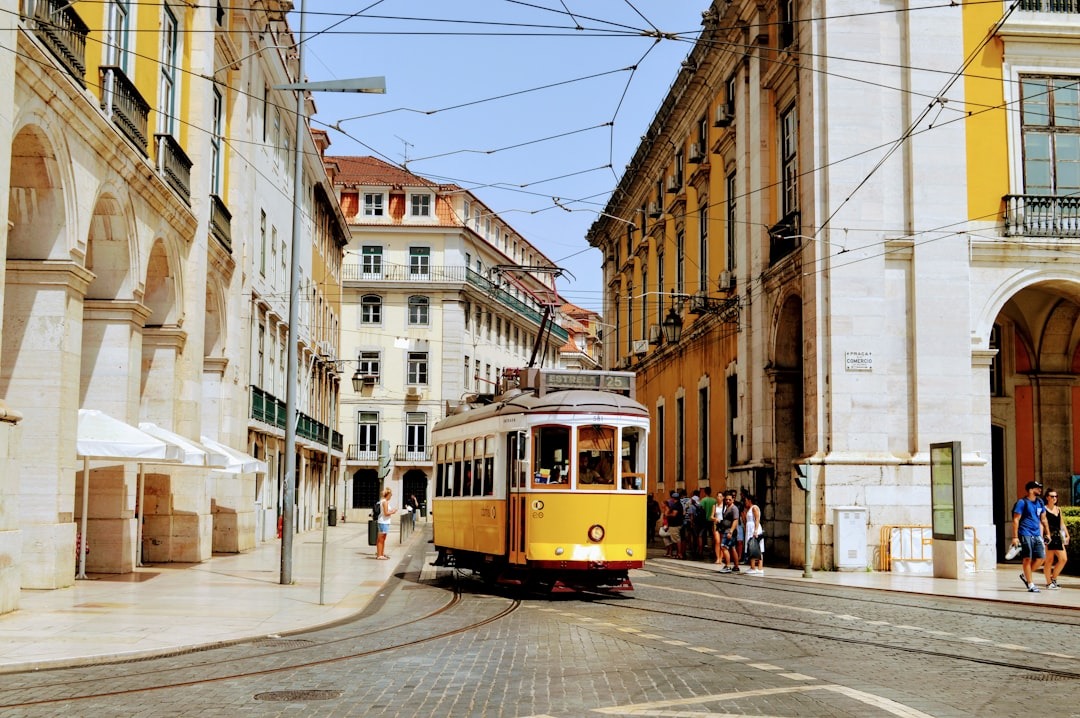
On-Board Ticket: €3.30
Buying directly from the driver costs €3.30 as of January 2026. It's the most expensive and least practical option: it requires exact change and isn't valid on any other transport. Only useful if you're taking a single tram ride and have no other journeys planned. For everyone else, there are better options.
1-Hour Carris/Metro Ticket: €1.90
The 1-hour ticket costs €1.90 and is valid on trams, buses, and the metro for 60 minutes. You'll need a Viva Viagem card (€0.50) or a Navegante card. With Zapping credit loaded, each journey costs €1.72.
24-Hour Pass: €7.25
The Carris/Metro 24-hour pass costs €7.25 and covers unlimited journeys on trams, buses, and the metro for 24 hours from first validation. If you're planning more than four journeys in a day, this is clearly the best value. Load it onto a Viva Viagem or Navegante card at any metro ticket machine.
Lisboa Card: Free (Included)
The Lisboa Card covers unlimited travel on this tram and all Carris and Metro services. The 24-hour adult version costs €31 and includes free entry to more than 50 museums and monuments. Worth it if you're visiting the Castle, Jerónimos Monastery, and other paid attractions. Buy at visitlisboa.com or at Ask Me Lisboa tourist offices. visitlisboa.com ou nos postos Ask Me Lisboa.
Practical note: The on-board ticket is cash-only — no contactless or card payments. Always carry coins or small notes.
Planning a full day out? Combine your tram ride with a visit to one of Lisbon's free museums in Lisbon — several are within walking distance of stops along the route.
Bonus: What to See at Tram 28 Stops That Guides Ignore
Tourist guides mention the Sé, the Miradouro de Santa Luzia, and the Basílica da Estrela. The tram won't tell you much else. Here's what I will.
Museu do Fado — Alfama
The Alfama stop is a five-minute walk from the Museu do Fado (Fado Museum), at Largo do Chafariz de Dentro. It tells the story of this uniquely Portuguese music in a contextual, thoughtful way — without the tourist romanticism of the evening fado restaurants. A permanent exhibition with audio and video — well worth 45 minutes.
📍 Address: Largo do Chafariz de Dentro 1, 1100-139 Lisboa
🕐 Hours: Tue–Sun: 10:00–18:00 (10:00 AM–6:00 PM) | Closed Mondays
💶 Price: €5 adult | Free: under 12s and first Sunday of the month | museudofado.pt
🌐 museudofado.pt
Mercado de Campo de Ourique — Near the Terminal
A seven-minute walk from the terminus, Mercado de Campo de Ourique features fresh produce stalls in the morning and independent restaurants for lunch and dinner. Far less touristy than the Time Out Market, and far more authentically Lisbon.
📍 Address: Rua Coelho da Rocha 104, 1350-075 Lisboa
🕐 Hours: Mon–Sun: 10:00–23:00 (10:00 AM–11:00 PM) (restaurants may stay open later)
💶 Price: Free entry — prices vary by restaurant
🌐 mercadodecampodeourique.pt
Casa Fernando Pessoa — Campo de Ourique
Just two minutes from the Tram 28 terminus is the house where Portugal's greatest poet Fernando Pessoa spent the final years of his life — now a museum. A recreated bedroom, exhibitions on his work and multiple literary personas (heterónimos), and a tranquil inner garden. Very few visitors realise how easy it is to reach from here.
📍 Address: Rua Coelho da Rocha 16, 1350-075 Lisboa
🕐 Hours: Mon–Sat: 10:00–18:00 (10:00 AM–6:00 PM) | Closed Sundays
💶 Price: €3 adult | Free: under 12s and Saturdays
🌐 casafernandopessoa.pt
Jardim da Estrela — The Best Stop to Linger
If there's one stop where locals get off simply to breathe, it's Estrela. A garden with a lake, a Victorian iron greenhouse, bandstands, and enormous ancient trees. It sits right opposite the Basílica — you can visit both in the same afternoon stroll. In the late afternoon, this is Lisbon as it truly is.
📍 Address: Praça da Estrela, 1200-667 Lisboa
🕐 Hours: Daily: 07:00–24:00 (7:00 AM–midnight)
💶 Price: Free
Cemitério dos Prazeres — The Most Unexpected Terminal
The elétrico 28 Tram 28 terminates right at the entrance to Cemitério dos Prazeres — and almost everyone walks straight past without going in. Don't. Prazeres is one of the most impressive historic cemeteries in the country, with neoclassical mausoleums, private chapels, and a scale that genuinely surprises. Buried here are the writer Eça de Queiroz, the poet Mário Cesariny, and hundreds of families from Lisbon's 19th-century upper bourgeoisie. Peaceful, photogenic, and completely free.
📍 Address: Praça São João Bosco, 1300-477 Lisboa
🕐 Hours: Daily: 09:00–17:00 (9:00 AM–5:00 PM)
💶 Price: Free
How to Ride Tram 28 Without the Headache
Start From the Wrong End — You'll Thank Yourself
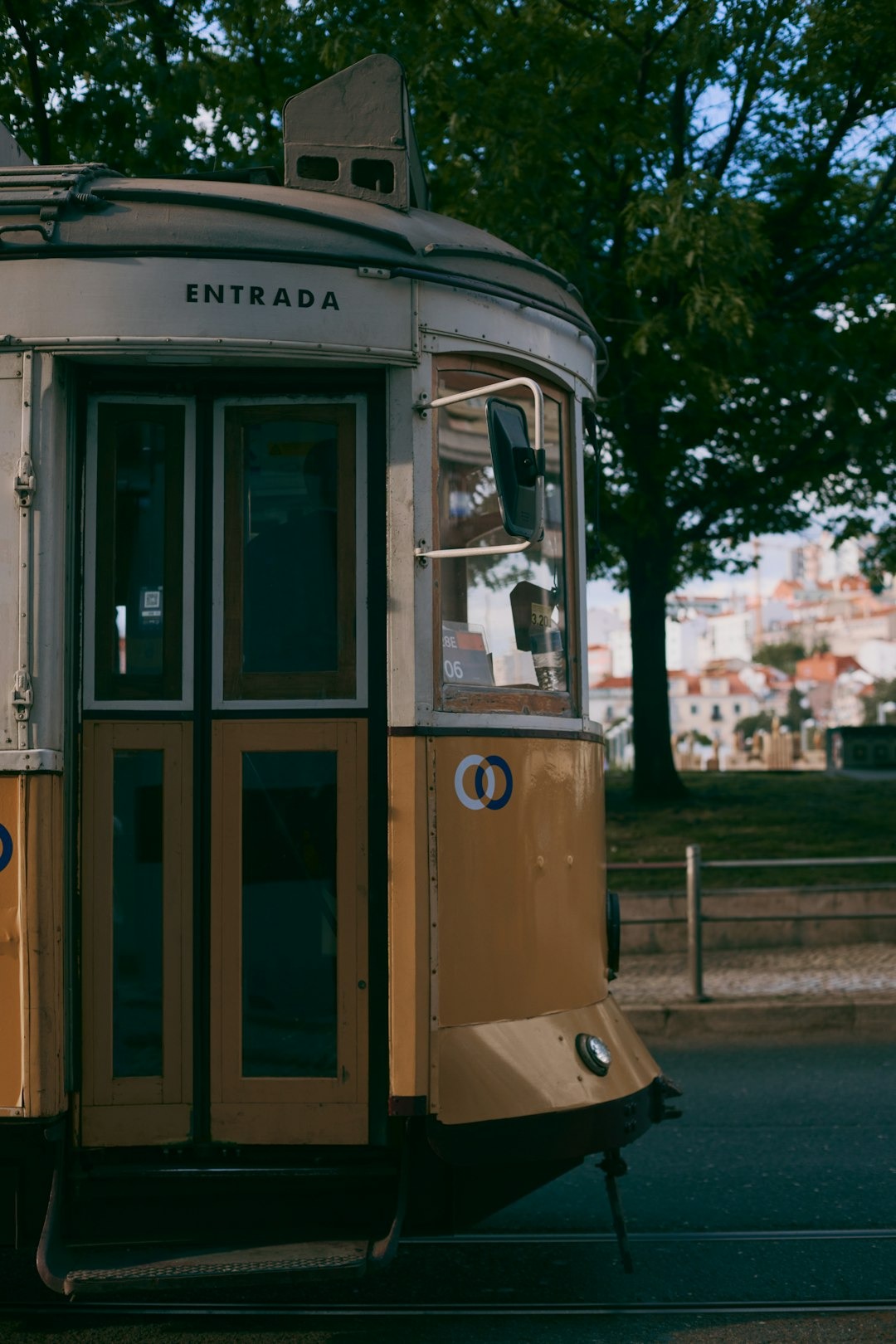
Everyone starts at Martim Moniz. That means queuing, a packed carriage, and standing for the whole journey. My tip: go the other way. Take the metro or a bus to Campo de Ourique and start from Prazeres, heading in the opposite direction. You'll board sitting down, the tram gradually fills as you go, and by the time it gets crowded you've already seen the best stretches. Hop off in Alfama, explore on foot, then either reboard or continue walking down to Baixa
Before 09:00 or After 18:00 — No Exceptions
Between 10:00 (10:00 AM) and 17:00 (5:00 PM), the carriage is reliably packed with tourists. Before 09:00 (9:00 AM), the city hasn't woken up yet — seats are free, the morning light is beautiful for photos, and the neighbourhoods have a completely different energy. After 18:00 (6:00 PM), traffic has calmed down, the sun is lower, and Alfama takes on that golden-hour glow that makes every photo of this city so iconic.
Your Belongings
This line has one of the highest rates of pickpocketing in Lisbon. Not because it's dangerous — it isn't — but because a tram full of distracted tourists is an ideal environment for those who make a living from it. The rules are simple: • Backpack worn on your front, not your back • Phone in an inside pocket or zipped into your bag • Wallet well away from back trouser pockets • Never photograph with your phone or camera dangling out of the window You don't need to be anxious — just aware.
Tram 28 vs Tuk-Tuk: The Honest Comparison
Alfama's tuk-tuks are pricier and reach spots this tram doesn't — they have their place. But if you want the authentic experience of a historic public transport line with no audio guide, the tram wins at any price. You can also combine both: Tram 28 for the main route and a tuk-tuk for the narrowest back streets. miradouros de Lisboa.
Are There Disruptions? Yes, There Are
Line 28E has regular interruptions — track works, badly parked cars, occasional incidents. In January 2026 there was a service restoration announcement from Carris. Before any visit, it's worth checking the service notices at carris.pt. When the route is disrupted between Martim Moniz and Graça, Carris usually provides replacement buses on that section.
Frequently Asked Questions About Tram 28
How much does a Tram 28 ticket cost in 2026?
In 2026, an on-board ticket costs €3.30. The most economical option is the 1-hour Carris/Metro ticket at €1.90, loaded onto a Viva Viagem or Navegante card. The 24-hour pass costs €7.25. With the Lisboa Card, the tram is included for free.
What is the Tram 28 route?
The route runs from Praça Martim Moniz to Cemitério dos Prazeres in Campo de Ourique. It passes through the neighbourhoods of Graça, Alfama, Baixa, Chiado, São Bento, Estrela, and Campo de Ourique — approximately 7 km (4.3 miles) and 45 minutes end to end, with around 36 stops.
What time does Tram 28 start and finish?
The line starts running at around 06:00 (6:00 AM) and finishes around 23:00 (11:00 PM), with an average frequency of 10 to 15 minutes. Check carris.pt for the up-to-date 28E timetable.
How do I avoid queues on Tram 28?
Board at one of the termini: Martim Moniz or Campo de Ourique. Arrive before 09:00 (9:00 AM) or after 18:00 (6:00 PM). Another effective strategy is to start from Prazeres in the direction less in demand. Avoid the 10:00–17:00 window, especially from March to October.
Is Tram 28 safe?
It's safe, but pickpocketing does occur. Keep your backpack on your front, your phone in an inside pocket, and your wallet away from back trouser pockets. Police presence has increased in recent years, but prevention is always the best defence.
Is Tram 28 included in the Lisboa Card?
Yes. The Lisboa Card covers unlimited travel on this tram and all Carris and Metro services. The 24-hour adult Lisboa Card costs €31 and includes free entry to more than 50 museums and monuments. Buy at visitlisboa.com or at Ask Me Lisboa tourist offices.
Want to make the most of your visit?
If you prefer a guided tour of Alfama and the historic neighbourhoods — with context, stories and access to alleyways the tram never reaches — there are walking tours and tuk-tuk tours with local guides in English and Portuguese. Small groups, free cancellation on most options.
Tram 28: Always Worth It — If You Know How
If you're visiting between June and September, or on any weekend, the honest answer is this: the public tram is standing room only from 10am onwards. The experience is still worth having — but if you want to actually see the stops rather than fight for space, the tourist tram with a guaranteed seat and audio guide is the smarter choice for first-time visitors. Queues at Martim Moniz regularly hit 45 minutes. The tourist tram has no queue — and it runs the same route, on the same vintage trams.
Planning your Lisbon trip beyond the tram? After riding Tram 28, the neighbourhoods it passes through have plenty more to discover. Check our guide to the best viewpoints in Lisbon to find the miradouros closest to the route, or visit the museums in Lisbon — several are a short walk from the tram stops. Hungry after the ride? Our guide to bacalhau restaurants in Lisbon covers the best spots in Alfama and Chiado. And if you're heading to Belém, don't miss the Pastéis de Belém guide — the confeitaria is just two stops from Chiado.